Steam was the thing of focus for many
scientists during the 18th century. This century witnessed toilsome
research carried out by scientists and technologists about how to get steam to
function as the chief source of power to run machines in industries. The path
to this scientific achievement was not without impediments. It was a hard nut
to crack. But, there was one scientist, who was too determined to give up. He
was James Watt.
James Watt developed a
condenser, a double acting engine and governor to make the experiment of steam
engine a success. His unswerving goal was to make the steam engine exigent to a
potential power source. His modifications to the English inventor who created
the first practical steam engine called Newcomen steam engine, for pumping
water. Newcomen, an ironmonger by trade, was specialized in trying to improve
ways to pump out the water from coal and tin mines, which was a major problem
in those days.
an ironmonger by trade, was specialized in trying to improve
ways to pump out the water from coal and tin mines, which was a major problem
in those days.
an ironmonger by trade, was specialized in trying to improve
ways to pump out the water from coal and tin mines, which was a major problem
in those days.
The improvements done to
Newcomen’s steam engine by James Watt, were fundamental to the changes brought
by the industrial Revolution. The picture below shows the achievement of Newcomen.
Not only, does Watt’s steam engine, a mile stone in the field of manufacturing
sector, but also, has become the backbone of the technology. Indeed, without his
achievement, the technological world would become partially crippled.
While working as an instrument
maker at the University of Glasgow, Watt became interested in steam engines and
its principles. He felt that the existing engine designs dissipated a great
deal of heat energy, during the process of repeatedly cooling and reheating the
cylinder. Watt introduced a modified mechanism which made use of a separate
condenser to avoid this waste of energy.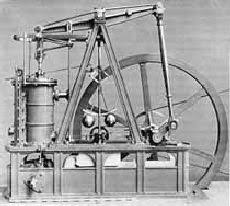 Instead, it improved the power,
efficiency, and expense considerably. Finally, his own achievement, gave him
the idea to modify its purpose to produce rotary motion. This new application
explored the possibilities of using steam engine for the purposes beyond
pumping water. His concept of horsepower and the SI unit of power, the watt,
form the basis of the modern study.
Instead, it improved the power,
efficiency, and expense considerably. Finally, his own achievement, gave him
the idea to modify its purpose to produce rotary motion. This new application
explored the possibilities of using steam engine for the purposes beyond
pumping water. His concept of horsepower and the SI unit of power, the watt,
form the basis of the modern study.
It was only a decade before the French Revolution, when John Wilkinson,an English iron worker, got an idea of improving a smooth cylinder into cast iron, to create a better cannon barrel. This an advancement, in no time brought forth many types of accurate millitary armaments.The machine boring did not get confined to the area of defence. Further, it spread its tentacles to many machine applications.It stood as a precedent to the Industrial Revolution.
The mid 18th century came across the invention of an English spinner who found a way to rotate eight spools of cotton at one time, instead of just one. At first, the operation was a done manually. But, innovative entrepreneurs started harnessing water power to turn large numbers of spinners at the same time. At a time when the textile industry which ruled the roost, the Spinning technology added another feather to its cap, However, it the cotton growers had a tough time to cope with the demand.
·
It was only a decade before the French Revolution, when John Wilkinson,an English iron worker, got an idea of improving a smooth cylinder into cast iron, to create a better cannon barrel. This an advancement, in no time brought forth many types of accurate millitary armaments.The machine boring did not get confined to the area of defence. Further, it spread its tentacles to many machine applications.It stood as a precedent to the Industrial Revolution.
The mid 18th century came across the invention of an English spinner who found a way to rotate eight spools of cotton at one time, instead of just one. At first, the operation was a done manually. But, innovative entrepreneurs started harnessing water power to turn large numbers of spinners at the same time. At a time when the textile industry which ruled the roost, the Spinning technology added another feather to its cap, However, it the cotton growers had a tough time to cope with the demand.
·


0 comments:
Post a Comment